ARCHITECTURE DESIGN
PROJECT
PRJ60408
This capstone design studio concludes the Bachelor of Science (Honours) in Architecture programme under the theme “Architecture with an Impact.” It challenges students to develop context-sensitive architectural interventions that respond to socio-cultural needs, strengthen urban fabric, and contribute meaningfully to the public realm. Building on previous studies of urban streets, the studio focuses on real-world community needs through multi-layered investigations of programme, spatial quality, context, and technical integration. Over 15 weeks, students develop a comprehensive architectural proposal supported by lectures on user analysis, site studies, programme development, and sustainable technologies aligned with the Sustainable Development Goals (SDGs). The final outcome demonstrates design innovation, contextual sensitivity, technical competence, and critical thinking through a resolved architectural design and accompanying report.
OBJECTIVES
What I aimed to?

To develop
an understanding of how architecture can mediate between - socio-cultural needs
- internal spatial requirements
- external contextual constraints within the broader studio theme

To Strengthen
students’
- architectural perspectives
- design approaches
in relation to the objectives and thematic direction of the studio

To develop
a comprehensive understanding of the architectural design process as an
- integrated and holistic practice
- incorporating relevant knowledge and skills gained from previous programme subjects.

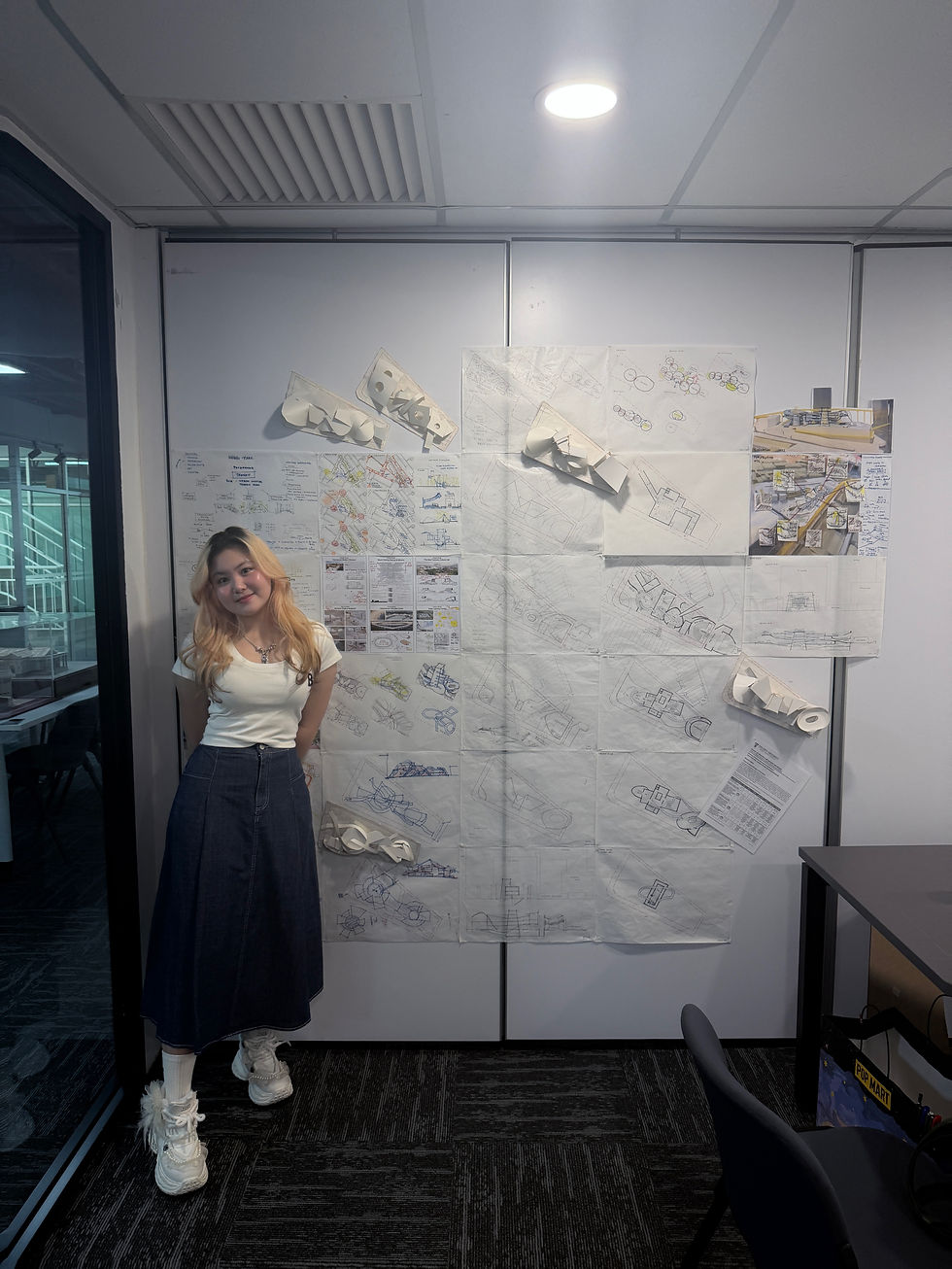

MODULE OUTCOME
What I have learned?
SELF-REFLECTION
To conduct

a comprehensive site study and pre-design analysis to identify
- key issues and opportunities
hat can inform
- architectural interventions
- design positions
- programme development

To develop
architectural design responses and strategies that reinforce the proposed design position and programme through
- analytical diagrams
- studies
- physical models

To develop
architectural design that demonstrates an informed understanding of
- design codes
- environmental considerations
- technological strategies
- tectonics
- architectural poetics
with emphasis on sustainability, functionality, buildability, and efficiency.

To demonstrate
a strong understanding of material selection and architectural detailing to enhance the
- experiential
- aesthetic
- innovative qualities of the design

To integrate
the various design investigations and outcomes into a comprehensive architectural presentation that demonstrates design as a cohesive and holistic process
What I feel?
 |
|---|
 |
 |
 |
 |
 |
Reflection
This module has been a valuable stage in my architectural development, allowing me to apply and consolidate the knowledge gained throughout the programme. Through site analysis, user studies, design exploration, and iterative development, I gained a deeper understanding of how architecture can respond to social, cultural, environmental, and contextual needs. The process challenged me to balance conceptual ideas with practical considerations such as functionality, circulation, sustainability, materiality, structure, and buildability. Developing the design through diagrams, models, and continuous refinement also taught me that architectural design is an evolving and integrative process that requires critical thinking and adaptability. Although I faced challenges in managing the complexity of the design and translating ideas into a resolved proposal, these experiences strengthened my confidence and encouraged me to make more informed design decisions. Overall, the module has improved my ability to approach architecture more critically and holistically, while highlighting areas for further development, particularly in technical resolution, design communication, and time management.